Jumblatt Shares Rare Insights on Decades of Lebanese-Syrian Relations, Israeli Withdrawal, and Hariri's Assassination
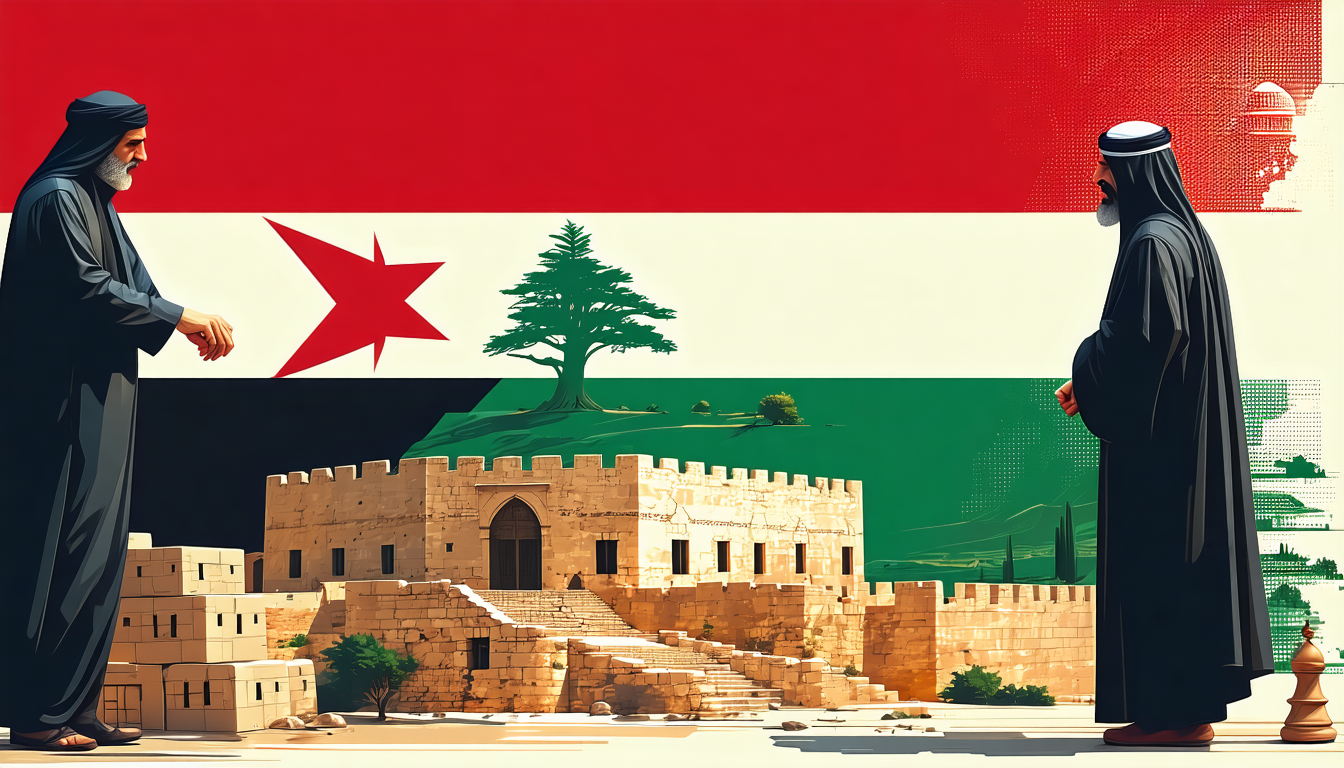
Walid Jumblatt, former head of the Progressive Socialist Party, has articulated his conviction that the Lebanese National Resistance was instrumental in compelling Israel's departure from Lebanon, declaring that "every resistance on occupied land wins in the end." He simultaneously emphasized that Lebanese aspirations center on the military assuming full security responsibility and the state functioning as the sole governing authority.
During an appearance on "Witness to the Era," Jumblatt traversed critical junctures in Lebanese and Syrian affairs. Following Hafez al-Assad's passing, he noted that Patriarch Nasrallah Boutros Sfeir initiated calls for Syria's complete military exit from Lebanon. Jumblatt himself pushed for implementation of the Taif Agreement in Parliament during October 2000, advocating for Syrian forces to relocate from Mount Lebanon to the Bekaa Valley as a preliminary step toward full withdrawal—a position that drew accusations of disloyalty.
Reflecting on the desecration of Hafez al-Assad's grave, Jumblatt suggested that individuals face reckoning for their earthly conduct extending beyond death, "proportionate to the suffering they inflicted on the Syrian people."
Describing his initial encounters with Bashar al-Assad, Jumblatt detected what he characterized as deep animosity toward the slain former Prime Minister Rafik Hariri. He attributed this sentiment to Bashar's inner circle, particularly Major General Muhammad Nassif, a prominent Syrian security figure who had mentored both Bashar and his brother Basil. Jumblatt recalled that Syrian officials initially viewed Bashar as merely "a student" and "a boy," observations made during sessions in Bloudan that included Hariri's presence. He also mentioned that former Syrian Vice President Abdel Halim Khaddam relocated to Paris following Hariri's killing, residing in a property once owned by Hariri and retained by his family.
On the subject of Hariri's assassination, Jumblatt emphasized the unexpected sophistication of the operation's preparation. He connected a 2004 meeting between U.S. President George W. Bush and French President Jacques Chirac to the subsequent adoption of Resolution 1559, which mandated Syrian military withdrawal from Lebanon and the dissolution of armed militias.
Regarding armed resistance factions, Jumblatt contended that Iranian interests established the framework of "army, people, and resistance," arguing that Lebanon's military should have assumed exclusive security authority following southern liberation. He stressed that Lebanese citizens continue to anticipate the restoration of complete state authority.
Jumblatt also discussed the era of Syrian security operations in Lebanon, highlighting Major General Ghazi Kanaan's role overseeing Syrian intelligence activities following the 1982 invasion, succeeding Muhammad Ghanem. He touched upon the circumstances surrounding Kanaan's death and Rustom Ghazaleh's subsequent appointment to manage Lebanese affairs. While acknowledging respect for certain Syrian officers including Saeed Bayrakdar and Ibrahim Safi, Jumblatt noted considerable variation in their character and conduct.
The 2001 mountain reconciliation represented a turning point, with Patriarch Sfeir's visit to Al-Mukhtara serving as a watershed moment for Christian reintegration into Mount Lebanon and restoration of stability. The accord encompassed participation from diverse Christian factions, including representatives aligned with Michel Aoun and Samir Geagea's Lebanese Forces party.
Jumblatt's confidence in Bashar al-Assad eroded during his final Syrian visit in 2011, coinciding with the emergence of civil unrest. The shooting of unarmed protesters in Daraa and detention of tribal figures intensified his reservations. He identified this period as marking the regime's escalating dependence on "Shabiha" militias, which he described as criminal elements released from incarceration.
His recollections emerge amid Lebanon's comprehensive reassessment of the Syrian occupation period and external powers' influence within the country. Current regional developments have reignited contentious discussions regarding armed faction arsenals, state monopoly on weaponry, compliance with the Taif Agreement and international mandates, and the reopening of longstanding security and political dossiers in the aftermath of Syria's regime transformation.
Compare options